
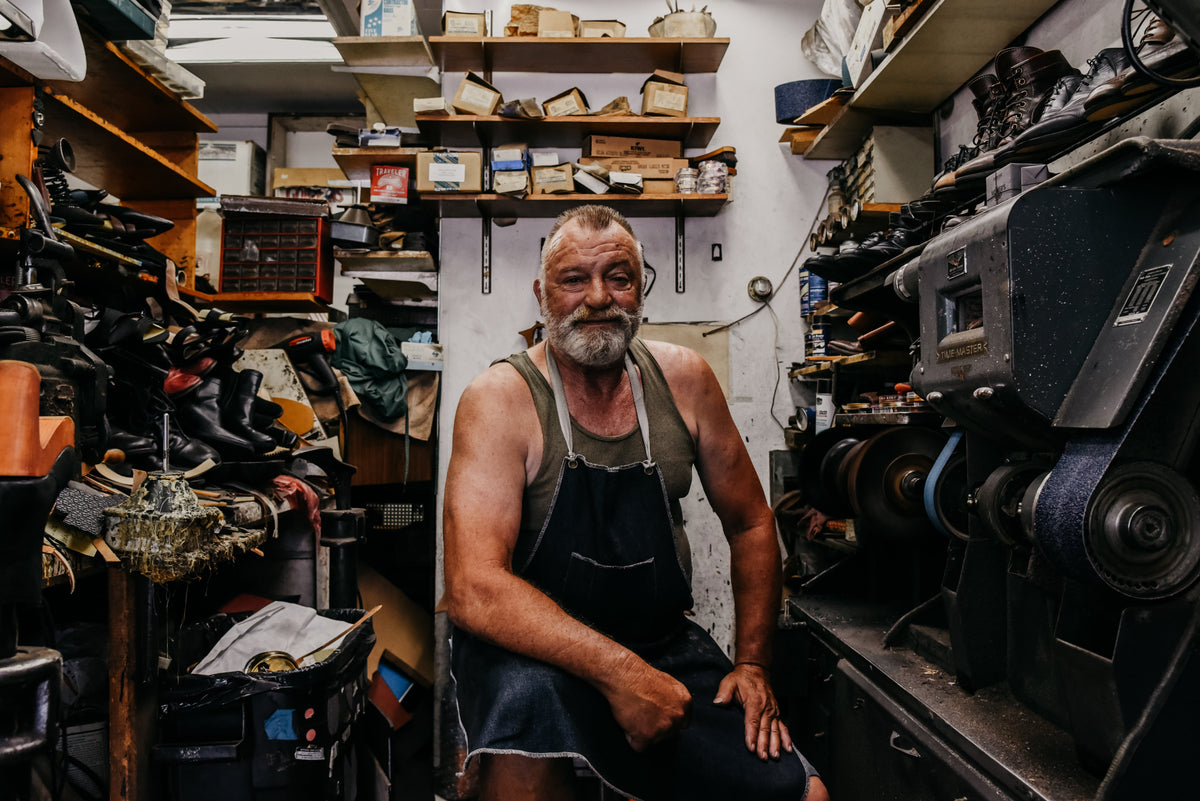
Some materials improve when they stop looking new.
Leather softens where a hand reaches for it. Wood darkens around the edge of a table. Brass loses its uniform shine. Canvas fades. A tool handle picks up the shape of the person who uses it.
We call this wear, but that word makes it sound like damage. Often it is closer to a record.
Patina is proof of participation
A factory finish is complete before an object enters your life. Patina is the part you add yourself.
That is why two identical objects can eventually feel completely different. One sits untouched; the other accumulates scratches, oil, sunlight, friction and repair. Time becomes a material.
The result is not perfection. It is specificity.
Why old materials feel warmer
Perfect surfaces keep a little distance. They ask to be protected. A table with a few marks invites another glass. A worn chair does not care how carefully you sit down.
There is comfort in an object that has already survived ordinary life.
This is one reason natural materials tend to age so convincingly. Wood reveals new tones. Leather bends instead of simply scuffing. Metals oxidize. Linen softens. Their changes feel related to what they are rather than pasted on top of them.
Repair can add rather than subtract
Modern consumer culture often treats repair as a temporary measure before replacement. Older traditions were less embarrassed by evidence of fixing something.
A patched piece of canvas, a replaced handle, a visible wood repair or an old chair with newer upholstery can create a more interesting object because its history remains legible.
That does not mean everything old is better. It means age can become a design element when the underlying object was worth keeping.
Home should be allowed to accumulate
A room assembled all at once can look finished quickly. A room built over years usually tells a better story.
The best spaces often combine things from different moments: something inherited, something found, something handmade, something new enough to begin collecting its own marks.
The goal is not nostalgia. It is continuity.
An object with a past reminds us that usefulness and beauty are not opposites—and that sometimes the most satisfying finish is the one nobody applied at the factory.

Leave a comment
All comments are moderated before being published.
This site is protected by hCaptcha and the hCaptcha Privacy Policy and Terms of Service apply.